
Everyone blames the cold. The windmill made it through January fine, they say, and then February hits and it dies. Must have been the temperature. But in a lot of cases, it wasn't.
The real killer in a northern winter is dehydration. This sounds counterintuitive when you're surrounded by snow and ice. The water is right there. But that's the thing about cold soil: it doesn't release moisture the way warm soil does. Root zone temperatures in the mid-30s, which is above freezing, can drop hydraulic conductivity in roots enough that the plant simply cannot pull water even when water is technically available. The moisture is there. The roots can't access it. The palm desiccates from the inside out while the thermometer stays above 32.
I learned this the hard way with my first Phoenix sylvestris. Planted May 2024, boxed it for winter with insulation and a small heater on a thermostat. Checked the temperature inside the box. Never got dangerously cold. Palm died anyway. No spear pull. No obvious freeze damage. It just failed.
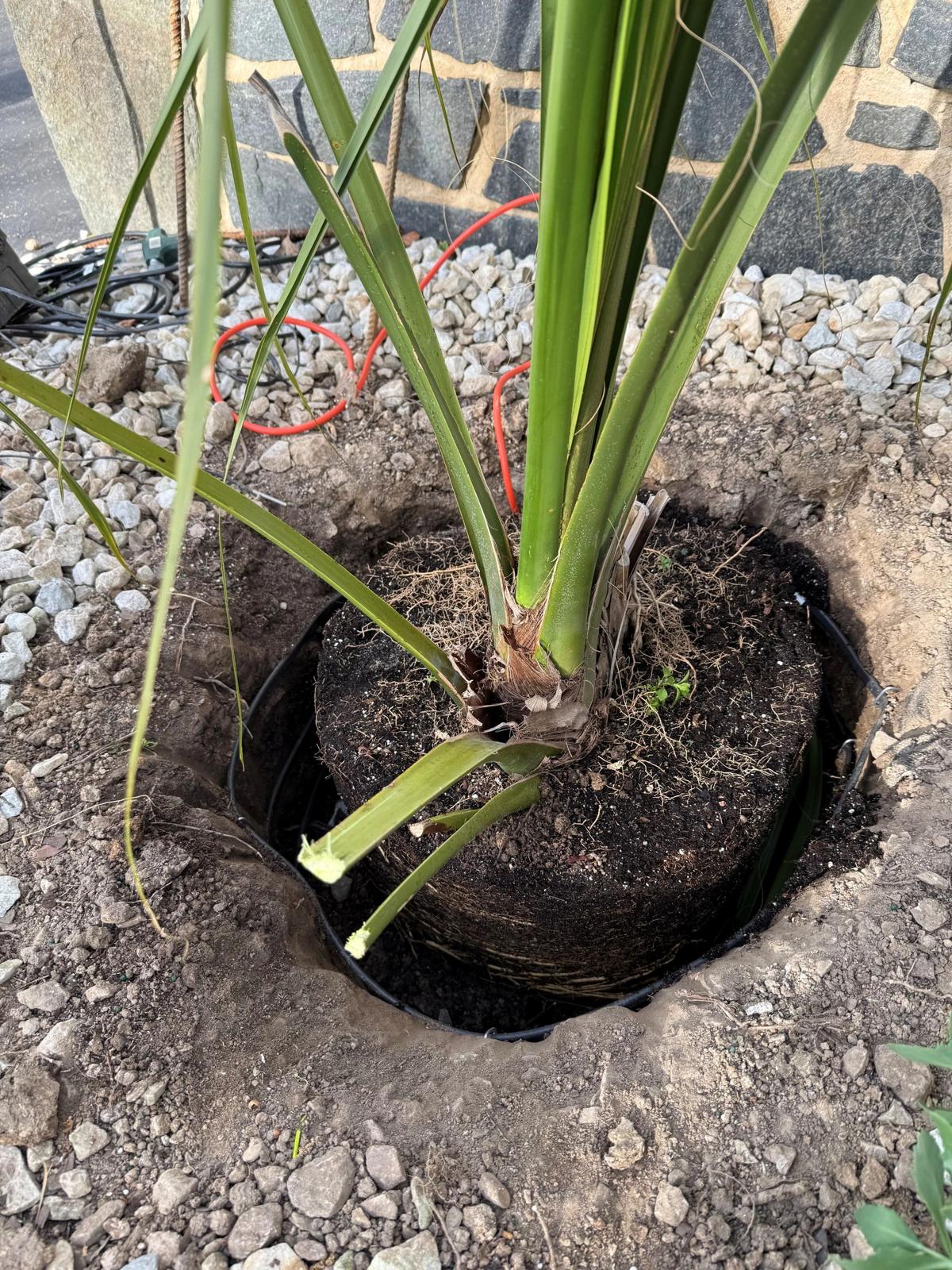
Year two I did two things differently. I added a soil heating cable to keep the root zone warm. And I poured a gallon of water directly into the box every two weeks throughout winter. In spring 2026, that phoenix came out with fresh green growth. Same species, same location, same box design. The only differences were root zone temperature and supplemental winter watering. That was the whole fix.
The mistake most growers make is treating winter protection as a temperature problem only. Get the air inside the box warm enough and the palm survives. But a cold root zone is a silent liability. The roots are doing the work of keeping the plant alive all winter, and if the soil temperature drops low enough they stop functioning regardless of what's happening above ground. Even a modest setpoint changes the equation.
This is also why thorough fall watering matters more than most people realize. University of Florida extension researchers have noted that desiccation is one of the primary cold-season killers even in comparatively mild climates. In zone 5, where the soil can stay cold for months, the effect is amplified. Wet soil holds and releases heat better than dry soil, which helps the root zone stay marginally warmer. And a well-hydrated palm entering winter has a bigger buffer than one that coasted dry through October.
The protection box and the heater are doing one job. The root zone cable and the watering are doing a different job. You need both. I spent a year figuring that out with a plant that costs real money and takes real time to establish.
Cold-hardiness ratings are, in a sense, a simplification. They describe what the plant can survive when everything else is right. A Phoenix sylvestris is rated zone 8b/9a in most references. Mine survived a zone 5b winter. But it didn't survive it alone. It survived because the roots stayed warm enough to drink.
Until next time,
— Tim