
Every October the garden centers hang the same banner. Fall is for planting. For a maple, a lilac, or a row of arborvitae, it's good advice. I'm not here to argue with the maple. I'm here to explain why your palm never got the memo.
The slogan works because of how trees build roots. A deciduous tree drops its leaves, stops spending energy up top, and keeps pushing roots into soil that stays warm long after the air turns cold. Woody roots branch and fill in from what's already there. By spring that tree has a head start it built in the dark. Fall planting is basically free root time.
Palms don't play by those rules. A palm doesn't branch out a woody root system year after year. It sends new roots out from a band at the base of the trunk called the root initiation zone, each one growing on its own, and it does that work when the soil is warm. A 2005 study in Arboriculture & Urban Forestry tracked root growth on sixteen palm species through the year. Roots grew most abundantly in the warm months, with soil sitting around 68 to 70 degrees, and fell way off when December soil dropped near 50. The recommendation that came out of it was late spring to early summer, the longest warm stretch a new planting can get. And that was California soil. Ours goes colder, faster.
Now picture a palm planted in October somewhere with a real winter. The soil is already sliding toward the 40s. Whatever roots got disturbed going into the hole aren't being replaced. Then winter lands on a plant sitting in ground it hasn't grabbed onto yet.
Here's the part that bites. Cold roots can't move water well, even when the soil is moist. I've said it before and I'll keep saying it: cold doesn't kill most palms, thirst does. A fresh fall planting is about the thirstiest palm you can build. Roots in cold soil, barely connected to the ground around them, staring down months of drying wind. You can box it, heat it, and wrap it with love. You still can't make a cold root drink.
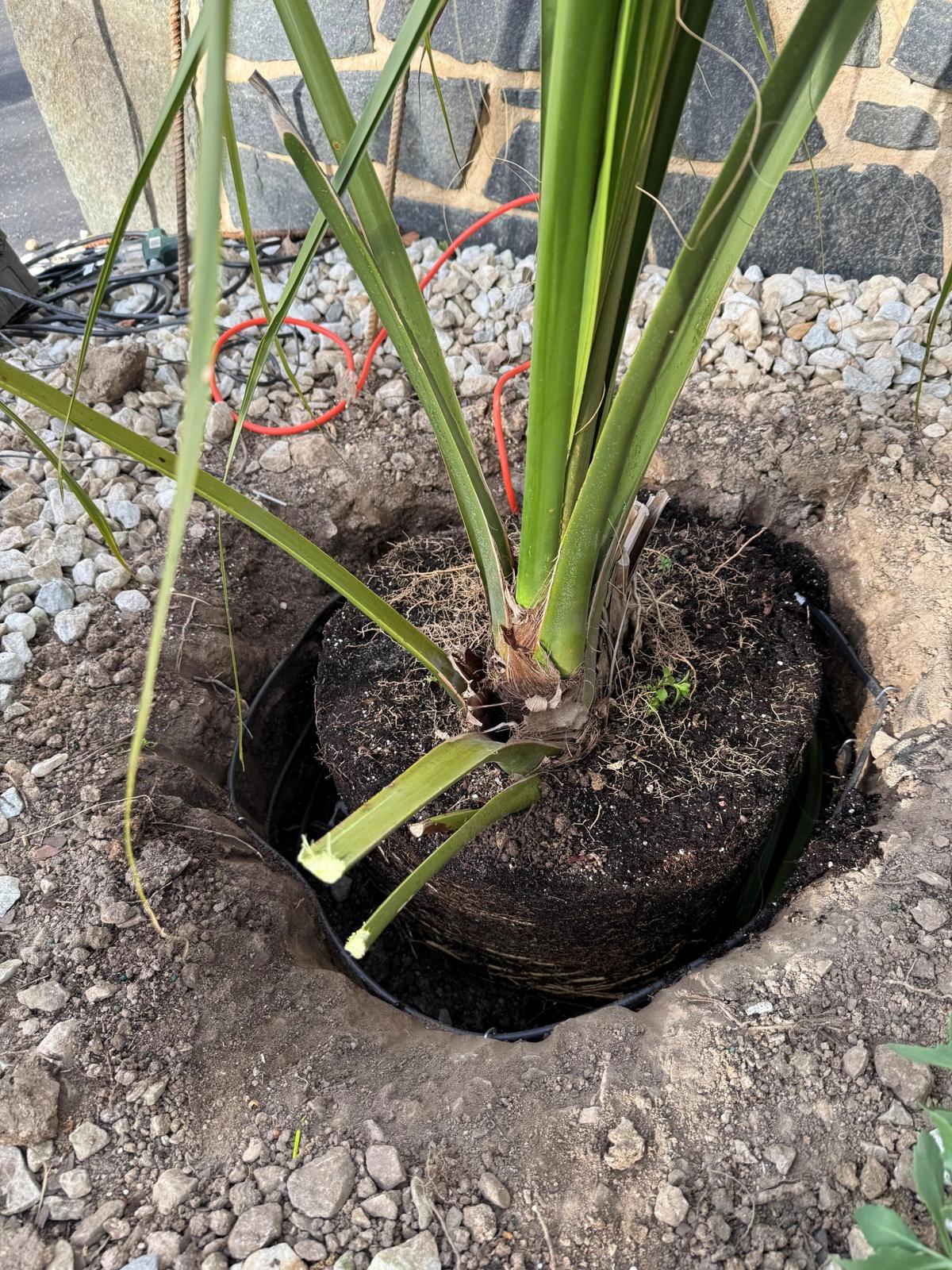
In my yard in southeastern Wisconsin, the in-ground window closes around mid to late July. That's not caution for its own sake. It's math. A palm that goes in during May or June gets a whole summer of warm soil to push roots before the box ever goes on. My Sabal palmetto went into the ground on May 29 this year, with every warm week of the season still ahead of it before its first winter. Even windmill palms, which shrug off cool soil far better than most, want that runway.
So what do you do with the palm you spot on a fall clearance rack, or the one that's been living in a pot on the patio all summer? Keep it in the pot. A potted palm wintered somewhere cool, bright, and above freezing comes through with its root ball intact and undisturbed. Then in spring, once the soil warms up, it goes in the ground already rooted and ready, with the whole season in front of it. That isn't a consolation prize. That's the head start.
Fall is for planting. Spring is for palms. The maple can have October.
Until next time,
— Tim