
Every gardener has heard it: sleep, creep, leap. Plant something new and expect nothing the first year, a little more the second, and the real show by year three. It's one of those sayings repeated so often nobody questions where it came from. I believed it too, until a sabal palmetto in my own front yard broke the pattern in a single summer.
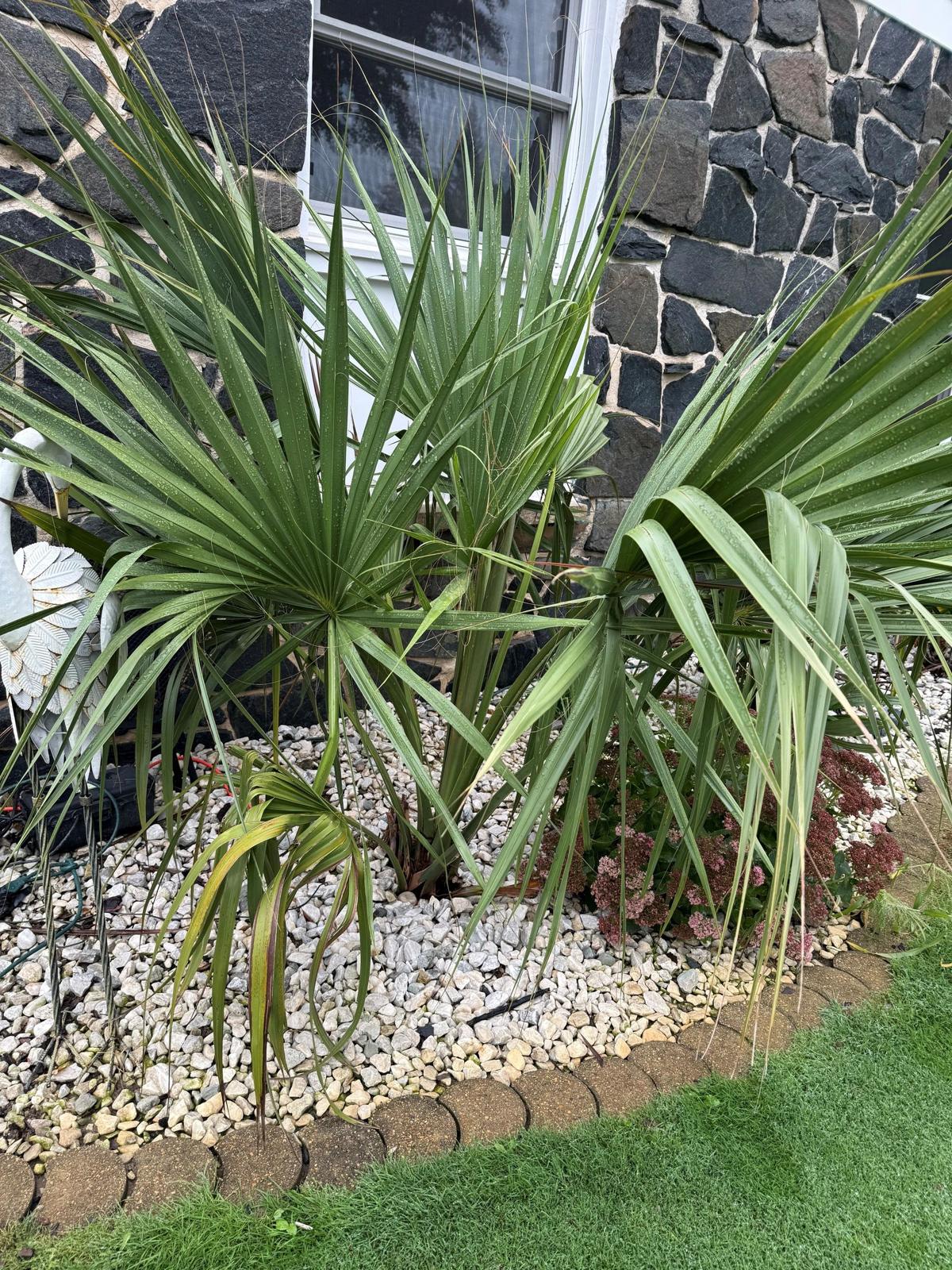
I planted that palm on May 29, 2026, moving it out of the fifteen to twenty gallon pot it had outgrown since 2022. Sabal palmetto has a reputation for punishing transplants worse than almost any palm out there. It's known to sit for a year, sometimes longer, doing nothing visible while it rebuilds a root system it often sheds entirely in the move. Ask anyone who has planted one and they'll tell you to expect a sulk. That sulk is really where sleep, creep, leap comes from in the first place. It's not about the plant's internal calendar. It's about how long cold, unheated native soil takes to warm enough for roots to actually function.
So I skipped the cold soil. The same day I set the palm in the ground, I buried a rootzone heating cable in a spiral around the rootball and set it to hold seventy five degrees. I marked the base of the emerging spear with a Sharpie so I'd have a real number instead of a guess. By July 8 it had pushed about six inches. By July 16, over a foot. By July 22, almost two feet. On August 12 that spear finished opening into a full fanned frond, and by the end of the month a second spear was already pushing right behind it.
That is not a sleep year. That is closer to a leap, in the same season the books say to expect nothing at all.
Here's the mechanism, as far as I can tell from years of watching this play out on other palms. Roots sitting in cold soil, even soil that never freezes, lose most of their ability to move water into the plant. I've lost a Phoenix sylvestris to thirst, with plenty of moisture sitting in the ground around it, because its roots were too cold to use it. Warm the soil and that bottleneck disappears. The plant isn't deciding whether it likes its new home. It's waiting for its roots to be capable of doing their job.
I want to be honest about what this does and doesn't prove. This sabal hasn't seen a Wisconsin winter yet. That test comes this year, and I have no idea how it turns out. What I do know is that the sleep year isn't some fixed biological rule every transplant has to obey. It's a soil temperature problem, and if you solve the soil temperature, you can watch a notoriously slow palm skip its sulk entirely.
My windmill palms never got this treatment. They don't need it. They shrug off cool soil about the same way they shrug off a hard frost. Not every plant is fighting the same battle, and knowing which one you're actually fighting is most of the work.
Until next time,
— Tim