
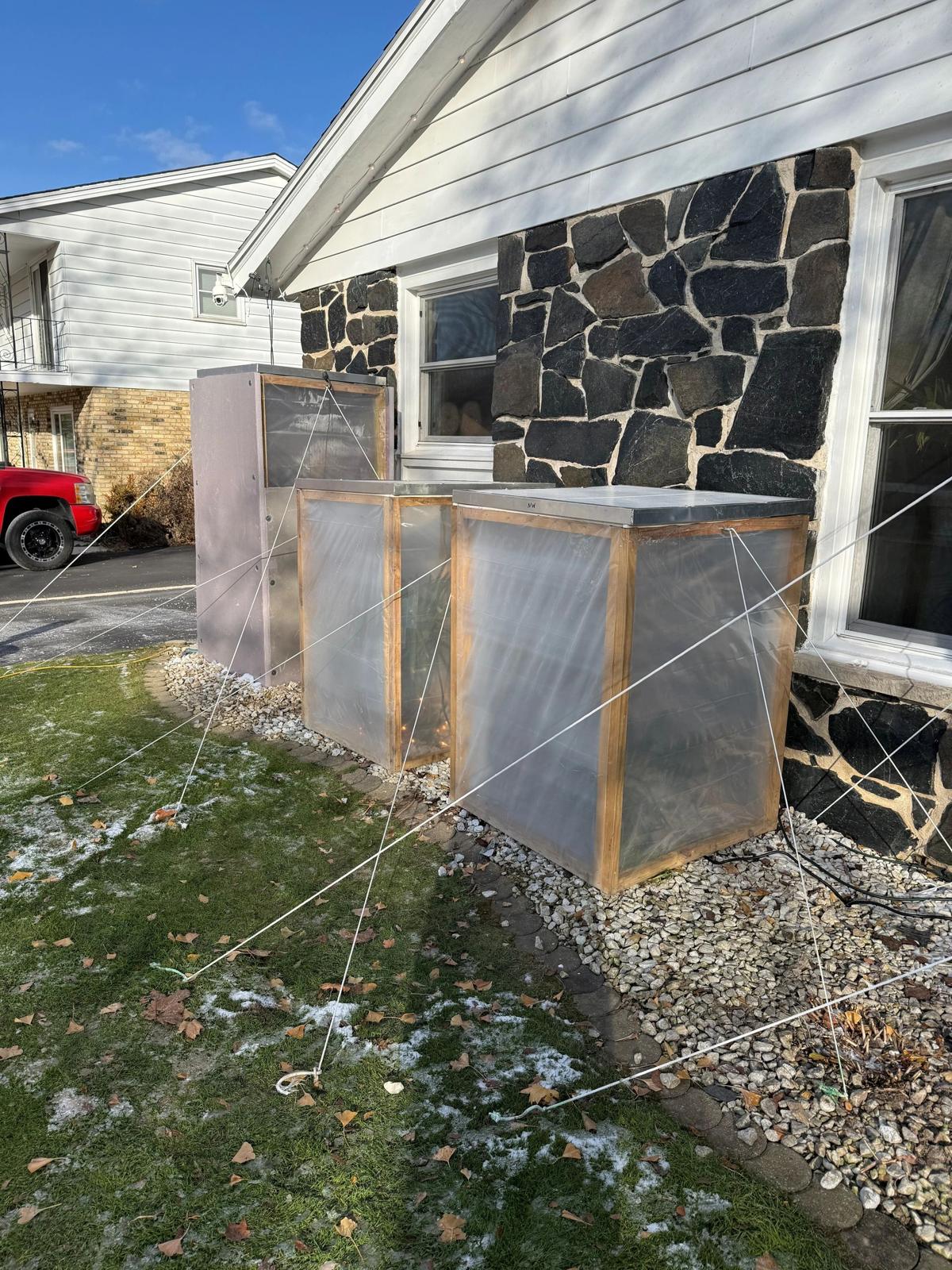
Everyone treats the low temperature like it's the whole story. It isn't even the main character.
I get asked this constantly, some version of "how does your palm survive negative degrees." People want the one number, the low. But the low is only the opening scene. What actually decides whether a marginal-hardy palm makes it through a northern winter or doesn't has almost nothing to do with how far the mercury drops on the coldest night, and everything to do with four other things nobody puts on a plant tag.
Start with recovery. A nine degree night is nothing if the next afternoon climbs back into the upper thirties. The palm gets to thaw, breathe, and reset before the next round comes through. Take that same nine degrees and stack it under a week of highs stuck in the low twenties with zero recovery above freezing, and you have a completely different, far more dangerous event, even though the coldest single reading might look milder on paper. Duration beats depth almost every time. Researchers studying windmill palms in the field have documented the same pattern: sustained frost at the crown is what actually kills, not a brief cold spike the plant can shrug off and rebuild from overnight.
Then there is active heat at the crown, the one growing point a palm cannot regenerate if it dies. Roots can recover. Trunks can scar over and keep going. Even a badly damaged frond gets replaced by the next one up. The crown does not get a second chance. A single heat source aimed directly at that spot, even a modest one, is often the difference between a palm that limps through winter looking rough and one that never leafs out again.
Sun angle is the factor people miss completely, because they are thinking about air temperature and forgetting about solar gain entirely. Late February sun sits at almost the same angle in the sky as September sun. A south or west facing wall in late winter is not just brighter, it is a genuine heat source, soaking up that low winter sun all day and giving a share of it back overnight. Anyone who has read up on thermal mass already knows the instinct here, a stone or brick surface sitting in full winter sun can run noticeably warmer than open ground nearby, and that gap compounds night after night through the coldest stretch of the season.
Which leads straight into wall exposure. Exact location gets overrated in general. My own windmill palm has done fine on the west side of the house for the better part of twenty years, nothing special about the spot itself. But there is one rule I will not bend on. Never the north side. A north wall blocks the low winter sun completely and funnels wind straight at the plant instead of breaking it. South or west gets you both the solar gain and a windbreak in the same spot.
None of these five factors work alone. A palm with great heat at the crown but no daytime recovery still struggles through a long freeze. A palm parked against a warm wall with no protection at the growing point still risks losing everything in one hard week. It is the whole system stacked together that gets a plant through, not any single piece of it working in isolation. Get all five pulling in your favor and a palm rated hardy to twenty degrees can genuinely see single digits some years and still push clean green growth again by May.
Until next time,
— Tim