
I spent a little over two hours on the Palmcast last weekend. The episode goes live this Sunday at noon. If you have ever wanted to hear a Wisconsin guy talk cold-hardy palms with two people who ship them by the thousand, that is where to find me. Search it up on YouTube.
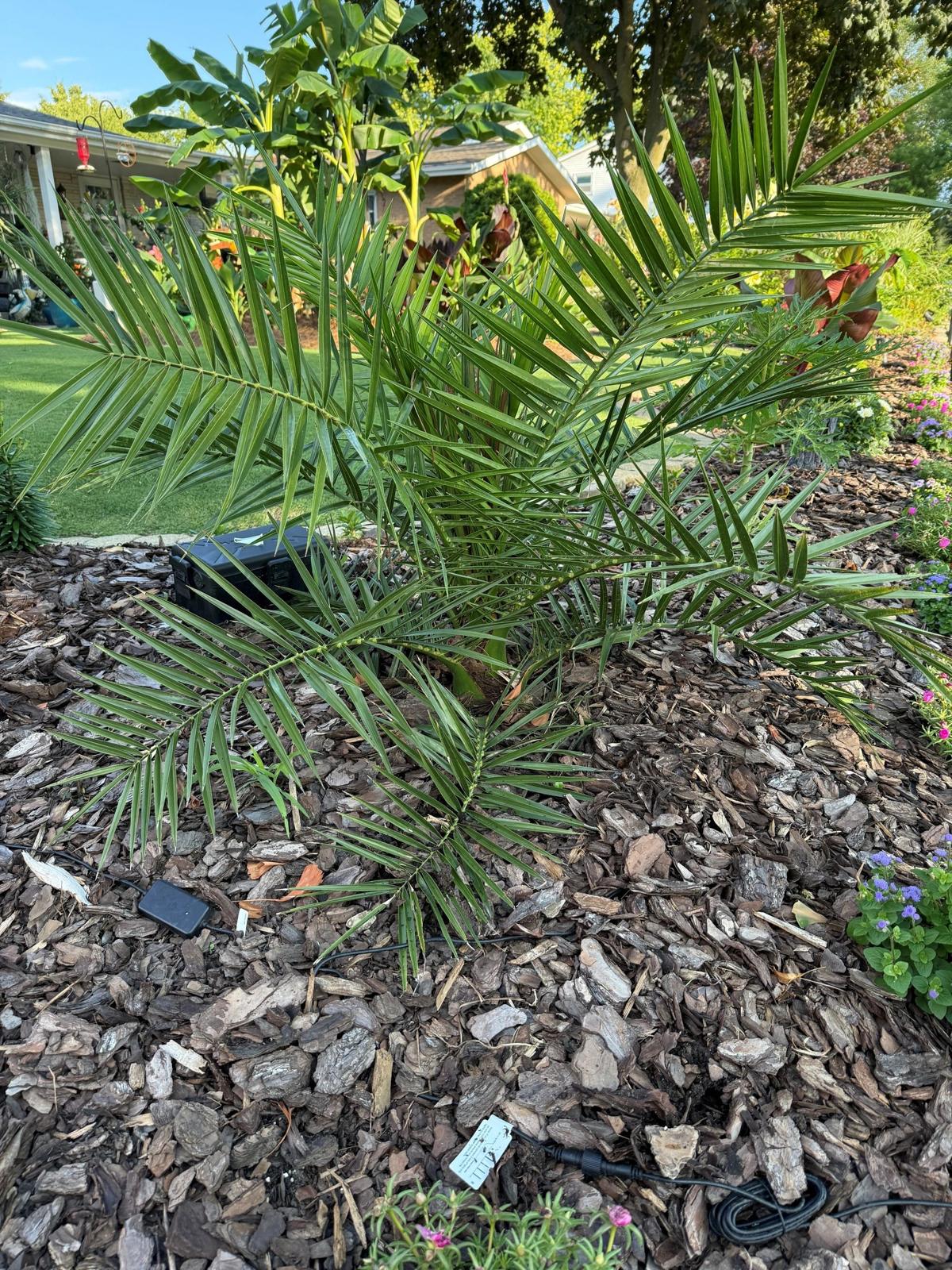
One moment from the recording stuck with me. I mentioned that my Phoenix sylvestris, a date palm rated for zone 9, made it through a Wisconsin winter. That got their attention. Then I told them where it is planted. Out in the open. No foundation behind it. No brick wall throwing back the afternoon sun. No sheltered south-facing corner. Just a date palm standing in the middle of the yard like it has every right to be there. That was the part they did not expect.
Here is why that detail matters. Almost every guide to growing a marginal palm tells you to find your warmest microclimate. Plant it against the house. Use a south wall. Tuck it where the brick soaks up sun all day and gives the heat back at night. That advice is not wrong. A warm wall genuinely helps. But it hides something. When a palm survives against a heated wall, you never really know whether the plant made it or the wall did.
I know, because I took the wall away and the palm still lived. The first Phoenix sylvestris I put in the ground did not have a rootzone heating cable, and it died its first winter. Not from the cold snapping it in half. From desiccation. Roots sitting in soil in the low thirties cannot move water, even when the water is right there in the ground. The plant dried out with its feet in moist soil. The second one, planted in May of last year, went in with a heating cable coiled around the rootball, running seventy five in summer and a lower maintenance setpoint through winter, all of it wrapped in an insulated box with a small heater on a thermostat. It came through this past winter clean. One winter so far, out in the open, and I am not going to pretend it is ten. But it is one more than the wall crowd will tell you is possible without a wall.
I talk a lot about the five things that actually decide whether a borderline palm survives, and wall exposure is one of them. What this plant taught me is that it might be the most replaceable one on the list. A warm wall is a passive assist. Active heat at the roots and the crown does the same job, and it does that job anywhere you can run an extension cord. You do not have to own the perfect corner of the perfect yard. You have to warm the roots and protect the crown, and the rest is more forgiving than most people think.
If you want the honest version of which palms are actually worth trying where you live, and how I protect the ones I keep, I put it in a free guide. It covers the five palms I trust most for zone 5 and 6, the box that keeps them alive, and the mistakes that cost me plants before I worked this out. You can grab it on the site.
Until next time,
— Tim