
Every fall, growers wrap trunks, mound mulch, and wait. Fewer stop to think about the six inches of dirt actually holding the roots, but that patch of ground underground is often doing more of the suffering than the part everyone can see.
Here is the science behind a decades-old nursery trick called soil heating cable, or rootzone heating, and a good reason to take it more seriously than a thermostat number would suggest.
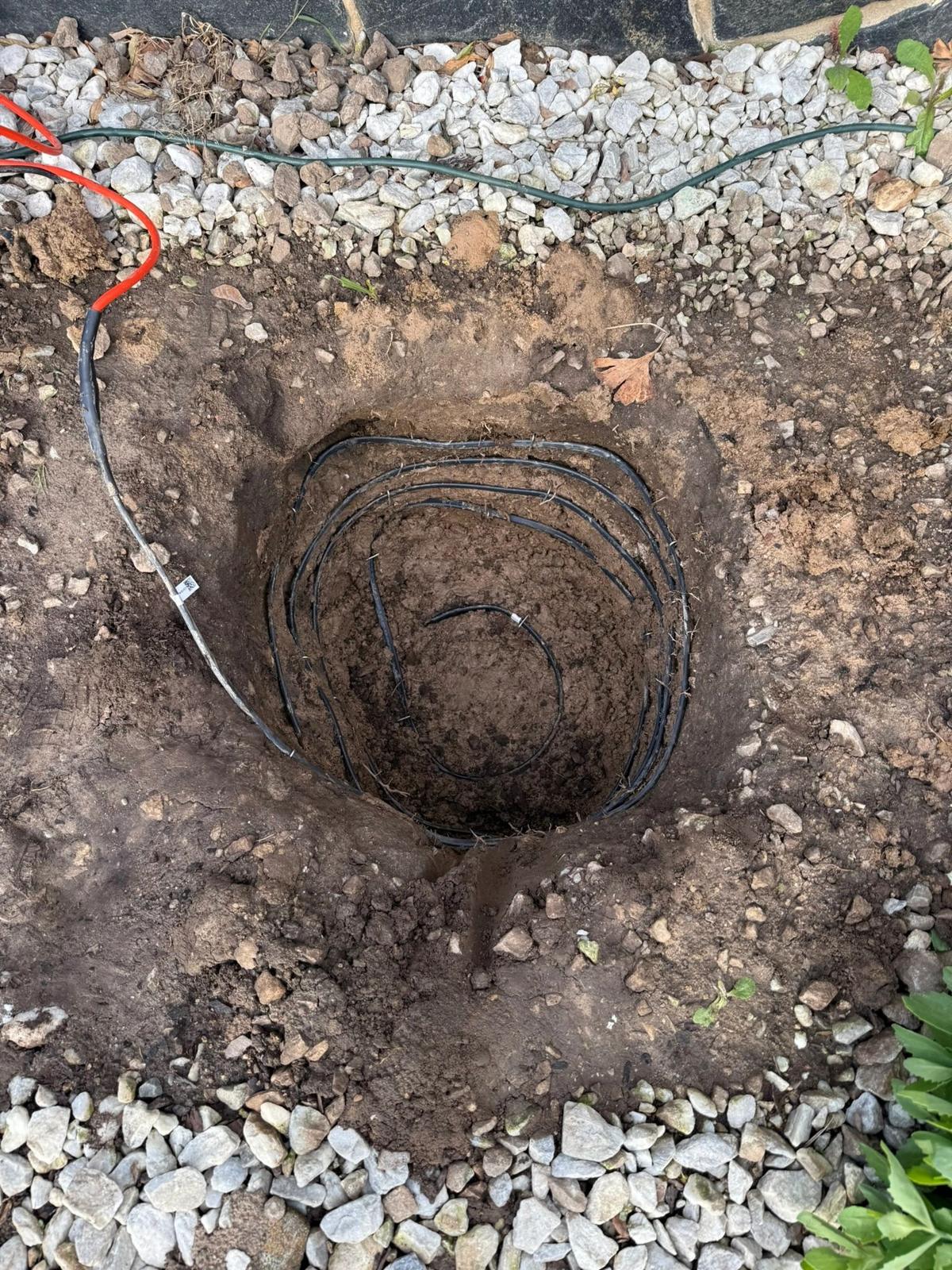
A soil heating cable is just electrical resistance wire, sealed and buried, doing the same thing a stovetop element does, generating heat directly from electrical current. Growers have used them for close to a century to speed seed germination, since warmer soil moves nutrients and water through a root system faster than cold soil does. What gets less attention is the other side of that coin, how much a cold root zone actually costs a marginal-hardy plant, not from freezing, but from something closer to drought.
Research on cold-stressed root systems backs this up plainly. Studies on wheat, rice, olive trees, and a range of temperate species all find the same pattern. Below a certain soil temperature, usually somewhere between 41 and 59 degrees Fahrenheit depending on the species, root hydraulic conductivity drops hard. Water gets thicker and slower moving through cold soil, root cell membranes get less permeable, and the whole system starts behaving as if it were sitting in a drought, even when the ground is plenty wet. Olive researchers found trees at cold root temperatures showing the same stress signature as trees in a genuine water deficit. The plant is not short on water. It just cannot move it.
That is the exact mechanism I chase with a heating cable and a thermostat. I run mine on a dual setpoint, a low one through the winter just to keep roots functional enough to pull water, and a high one around 75 in the growing season to actually push growth. The winter number is not trying to recreate summer. It is trying to keep the plumbing working. The summer number is doing something different, decoupling rootzone temperature from whatever the air happens to be doing on a chilly June morning, which is its own kind of win for anything trying to grow fast in a short northern season.
The setup differs depending on whether the plant ever leaves the ground. Under my in-ground phoenix sylvestris and sabal palmetto, the cable is permanent, buried once and left alone for good, since digging it back out later is not really an option. Around the seasonal tropical bed, bananas and cannas, the cable goes in fresh every spring after the bed is dug and comes back out again every fall before the corms get lifted, since leaving it buried under a plant I am about to dig up is just asking for a severed wire and a bad afternoon.
None of it makes a marginal palm hardy on its own. It just keeps the roots doing their job while everything else, the box, the crown heat, the timing, does the rest.
Until next time,
— Tim